June 30, 2013 Sunday Omnibus “A Special Dedication to the life of Swami Kriyananda” Guest: Nayaswami Asha also known as Asha Praver, author of Swami Kriyananda As We Have Known Him

Listen to Program.

June 30, 2013 Sunday Omnibus “A Special Dedication to the life of Swami Kriyananda” featuring Nayaswami Asha also known as Asha Praver, author of Swami Kriyananda As We Have Known Him.

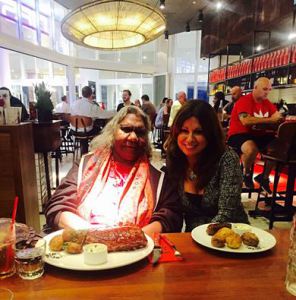
asha1Swami Asha has been a spiritual seeker since she was a young girl. In 1969 at Stanford University, she heard Swami Kriyananda speak for the first time. Instantly, she recognized him as her spiritual teacher. “I knew the moment he walked into the room that he possessed the consciousness I had long been seeking.” She soon became a founding member of the new community Swami was starting near Nevada City, California, called Ananda Village, based on Yogananda’s dream of world brotherhood colonies for “simple living and high thinking.” Swami Kriyananda placed Asha in the role of teaching and counseling soon after her arrival at Ananda. She also served as Swami’s correspondence secretary and personal assistant for many years. In 1987, Swami Asha and her husband, Swami David, became spiritual directors of Ananda Palo Alto in California, where they continue to serve today.  Swami Asha is author of Swami Kriyananda as We Have Known Him, a collection of more than 200 stories by people who have been touched by his teachings and spiritual friendship, often in remarkable ways. She is also author of Loved and Protected: Stories of Miracles and Answered Prayers.

asha2Virtually all spiritual teachers receive their knowledge from a teacher, who himself has a teacher. In the east, the teacher is often called “guru”, or dispeller of darkness. In the west, Jesus was called Master by his disciples. The series of teachers is known as a lineage, and for those who appreciate understanding the spiritual roots of a tradition, the lineage says much about the approach and expression of the teachings.  Asha has studied personally with Swami Kriyananda for more than 40 years. Swami Kriyananda was one of the most well-known exponents of Yoga in the West today, and a close, direct disciple of Paramhansa Yogananda—one of the few still living. Yogananda was and always will be recognized as an avatar—a Self-realized Master, a soul fully awakened in God.


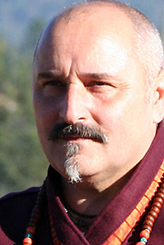
sk1naAt Yogananda’s request, Swami Kriyananda has devoted his life to lecturing and writing, helping others to experience the joy and living presence of God within. He has taught on four continents in seven languages over the course of nearly 60 years. His television program, audio and video recordings of his talks and music, and his many books in 28 languages have touched the lives of millions of people. Swami Kriyananda has taken the ancient teachings of Raja Yoga and made them intensely practical and immediately useful for people in every walk of life, on a daily basis. His books and teachings cover nearly every field of human endeavor, including spiritualizing business life, leadership, education, the arts, community life, and science. He has written extensive commentaries on the Bible and the Bhagavad Gita. Swami Kriyananda is also known as the “father of the intentional communitiesmovement” which began in the UnitedStates in the late 1960s. Inspired by his guru’s dream of establishing spiritual communities, in 1968 he founded the first of what are now eight Ananda communities worldwide. They provide a supportive environment of “plain living and high thinking” where 1,000 full-time residents live, work, and worship together.


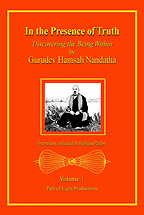
asha3Swami Kriyananda, a foremost disciple of Paramhansa Yogananda (author of Autobiography of a Yogi) has been prodigiously creative in his service to his Guru. His books are available in 28 languages in 100 countries. His music is performed around the world. In India, millions of people watch his daily television show. He has founded schools and retreats, and communities on three continents. He speaks eight languages, and has circled the globe dozens of times lecturing and teaching. In this “biography of consciousness,” Swami Kriyananda’s remarkable qualities are revealed with breathtaking clarity — love for God, divinely guided strength, joy in the face of adversity, humor, wisdom, compassion, and unconditional love. A true teacher, however, does not incarnate merely to show the world how great he is. He comes to illuminate for others the pathway to greatness we all must follow. Here, in some two hundred stories spanning more than forty years, personal reminiscences and private moments with this master teacher bring priceless, universal life lessons for all of us.


Crossing over the Bridge (61) Allen Lee Adkins Pioneer & Researcher, Matt Presti and Robert Arnett Otey B.A., M.S.Sc., Cs.j. The Works of Walter Bowman and Lao Russell – “The Wave”

061613CBJune 16, 2013 Crossing over the Bridge (Sixty-One in Series) Panel Allen Lee Adkins Pioneer & Researcher, Matt Presti and Robert Arnett Otey B.A., M.S.Sc., Cs.j. The Works of Walter Bowman and Lao Russell – “The Wave”

After growing up in suburban Dallas and Houston, Texas Allen embarked on a wide array of life experiences from traveling the world as a merchant marine engineer and moving to Hawaii where he began a life-long interest in meditation and health and healing practices to starting high tech companies in Silicon Valley and becoming a pioneer in the CD-ROM technology – developing among the very first CD-ROM applications and pioneering the first PC based CD-ROM recording systems. During this time he has widely traveled to 50 countries with extensive travel to Japan and Europe. While on a journey to India to deliver recording equipment to the Dalia Lama, Allen went to Kathmandu, Nepal to study Sanskrit and Ayurvedic Medicine with Dr. Manna Vajra who had carried on this practice in his family lineage for 1,000 years. This and subsequent early work with raw and living foods in the mid 1970’s was to form a life long focus and passion for understanding the intricacies of our human life and health secrets. After moving from Hawaii to California in 1979, Allen took a turn toward high technology at a critical time in the burgeoning Silicon Valley era from the mid 1980’s to the mid 1990’s.

Matt Presti is an independent researcher of Nature, Universal law, natural science, sacred geometry, alternative history, mythology, symbolism, numerology, alchemy, mysticism, spirituality, sacred texts, various religions, conspiracies, enlightenment, transcendence, shamanism, plants, herbology, natural medicine, alternative healing therapies, crevolution and consciousness explorer.

Robert Otey Cosmologist, Guitar Slinger, Song Writer, Music Producer, Studio Engineer, Video Producer, Sacred Geometrician, Russellian Science & Philosophy Initiate and Teacher, Dissenting Scientist, Heretic, Gnostic, Mystic, Cosmic Jester, Shamanic Voyager, Apiarist, Horticulturist, Outdoorsmen, Schauberger Environmentalist and Water Researcher, Master Gardener and tree hugging Nature Lover! I received my B.A. from U.C.S.D., La Jolla, Ca. in 1985, I Majored in Communications Theory with a Minor in The Music History of African Americans. He studied Classical, Baroque and Jazz Music at Cabrillo College, Aptos, Ca. in 1981-82 followed by Civil Engineering at American River College in Sacramento, Ca. 1976-78. He worked at Windham Hill Records in Palo Alto, Ca. after Graduating from U.C.S.D. Later he began working as a Studio Engineer in small Recording Studios around the SF Bay Area and for the next 15 years and co-produced his CD “Crooked Trail” with Sterling Crew in 1999. Robert Otey currently works as a Foreman of a Horse Ranch and Master Gardener caring for the Animals, Walnut and Fruit Tree Orchards and Organic Gardens on the Ranch.


May 5, 2013 A Dedication to the life & career of actor Michael York OBE (Original broadcast 2009)

my3Listen to program. With an impressive body of work on screen, stage, television, and with audio recording, Michael York retains the enthusiasm for the actor’s life he first experienced growing up in England. Joining the National Youth Theatre, he played Shakespeare in London and Europe, going on to perform extensively at Oxford University and graduating with an MA in English.

He joined Laurence Olivier’s new National Theatre Company in 1965 and shortly afterward made his film debut in Franco Zeffirelli’s The Taming of the Shrew with Richard Burton and Elizabeth Taylor.  He was also Tybalt in Zeffirelli’s Romeo and Juliet and John the Baptist in his Jesus of Nazareth.

York’s nearly 100 other screen credits include Joseph Losey’s Accident,  Bob Fosse’s Cabaret with Liza Minnelli, Something for Everyone with Angela Lansbury, the all-star Murder on the Orient Express, The Last Remake of Beau Geste, as d’Artagnan in The Three Musketeers,  the title role in Logan’s Run, and opposite Burt Lancaster in The Island of Dr. Moreau.  He even played himself in Billy Wilder’s Fedora. He was in all three Austin Powers movies and in both Omega Code films. His most recent film is The Mill and the Cross with Rutger Hauer and Charlotte Rampling.

His television work includes The Forsyte Saga, Great Expectations, Space, The Heat of the Day, A Knight in Camelot, The Night of the Fox, and The Lot (Emmy nomination). Recently in Larry David’s Curb Your Enthusiasm, he was also a guest character in The Simpsons. He most recently starred in The Four Seasons.

Broadway and regional theater credits include Someone Who’ll Watch Over Me, Bent, The Crucible, Ring Round the Moon, the world premiere of Tennessee Williams’ Out Cry, and the title role in Cyrano de Bergerac. He was in the musical of The Little Prince and recently toured the US in Camelot, playing King Arthur.

York’s distinctive voice can be heard in more than 90 audio book and film narrations as varied as The Book of Psalms, Memories, Dreams, Reflections, The Vampire Lestat, and his own children’s book, The Magic Paw Paw. Grammy-nominated for Treasure Island, he won awards for The Fencing Master, Creating True Peace, Goodbye to Berlin, and The Lion, the Witch and the Wardrobe. Recent recordings include How Do I Love Thee?, Peter and the Wolf, and The Carnival of the Animals.

Tthe narrator of The Word of Promise audio Bible, York’s latest recordings include Cry, The Beloved Country, Alice in Wonderland, and Earth Songs. His recording with composer Michael Hoppe of Prayers: a personal selection, was an Audie Award Finalist for 2012http://christianaudio.com.

In addition to performing with music at the Kennedy Center, the Hollywood Bowl, and the Aspen, Bard, and Ravinia Festivals, York has starred in William Walton’s Henry V and in the first concert performance of his Christopher Columbus. He was Peer in a concert version of Peer Gynt and Salieri in a special version of Amadeus, also at the Bowl.

His recording of the Tennyson/Strauss Enoch Arden was followed by several international concert performances, most recently in Prague. He has also headlined Strauss Meets Frankenstein and Intimate Letters with the Long Beach Opera. In early 2010 he performed the Walton/Shakespeare Henry V again, this time with Sir Neville Marriner and the Nashville and Detroit Symphonies. He was the narrator in the 2011 Christmas Concert with the Mormon Tabernacle Choir and David Archuleta. In 2011, he starred in “Lisztian Loves” with pianist Andre Watts at the Ravinia Festival.

He also works extensively in radio, his latest credit being “The Browning Version” for BBC4 in 2012.

York also enjoys writing. His latest book, Are My Blinkers Showing? (published by Da Capo Press, 2005), received great reviews, including “What a delight. Ahh, the actor’s life, well used,” from the Los Angeles Times.

His book Dispatches from Armageddon (published by Smith and Kraus, 2001) was reviewed by Prof. Richard Brown as “one of the most readable, literate, and insightful works ever written on the process of making movies.”

York also coauthored A Shakespearean Actor Prepares (published by Smith and Kraus, 2001). That book was a finalist in the Independent Publisher Book Awards in 2001 and was hailed by the Spectator as “a triumph… it deserves to become a classic.”

In 1991 he wrote an autobiography, Accidentally on Purpose (published by Simon & Schuster, titled Travelling Player in the UK). The Associated Press enthused, “Michael York inherits the mantle of his fellow countryman, David Niven, as a premiere storyteller.”

my7York’s wife Pat is a celebrated photographer. The two met in 1967 when she was assigned to photograph him. Married a year later, they have made their home in Los Angeles since 1976. Pat has exhibited her photographs all over the world in Moscow, New York, Paris, Belgium, London, Washington, Cologne, Basel, and Zurich. Her show Imaging and Imagining: the film world of Pat York opened at LA’s Motion Picture Academy, subsequently traveling to Prague, Mannheim, and Hong Kong. Her latest book is Fame and Frame.

York also lectures internationally on Shakespeare and the history and art of acting.  He has also taught Master Classes, most recently at U.S.C.

His contribution to his profession has been recognized with the award of Britain’s OBE, France’s Arts et Lettres, and a Star on the Hollywood Walk of Fame.

May 27, 2013 The Life and Works of Lesli Moore Dahlke ” The best is yet to come!”

Listen to program.

lmd1Lesli Moore Dahlke is a Southern Californian native. Being a native is a rarity for most “Californians,” who frequently come from other places in the country. But, proudly, I was born and raised in the bright beautiful Golden State.

I describe myself as a lucky child of the 50’s greatly loved by my parents. It was a time of innocence, a time when life was as gentle as a warm breeze. It was a time of growing up during the halcyon days.

I was raised in the San Fernando Valley, one of the original vast booming post-World War II suburbs of Los Angeles. I grew up in the shadows of tinsel-town’s glamour, its glitter and the glory days of Hollywood. My father, Del Moore, was a noted and successful television and movie actor.

I received a Bachelor of Arts Degree from California State University, Northridge. My degree was as a practitioner of Television and Film Production. My secondary emphasis was on the written word of journalism. As my career began, I pursued a successful career in Television Media Production.

My credits include commercial film production, and numerous areas of television production, including producing live sports programming.

I was the Supervising Associate Producer for the award-winning documentary, “The Eisenhower Years,” for The Discovery Channel, as well as for PBS Network programming. I also supervised the production of PBS Telecourses, the front-runner to today’s on-line universities.

I headed the production staff that produced the first cable series for the Playboy Channel and various other ventures.

I currently write articles as an Environmental Contributor, for the Salem-News.com on-line newspaper.

Although my industry experiences were vast, challenging, and never routine, my most challenging experiences were yet to come.
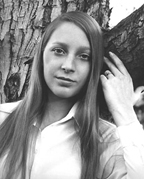
I was diagnosed with three virulent cancers caused by exposure to the carcinogenic Agent Orange while traveling with the USO, as an innocent 18-year old girl, in a war-torn Vietnam.

As of this date, I live daily with two rare and active cancers attributed to Agent Orange exposure.

I never miss a moment of this beautiful life. I am always filling my heart with remarkable memories of this wonderful journey we call life!


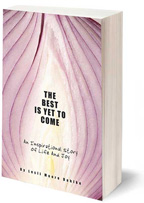
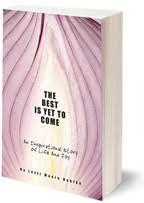
The-Best-Is-Yet-To-Come-Book-3D-213x300The Best is yet to Come!

The best is yet to come is an enjoyable adventure of my life, from birth to the current day. It is filled with surprising laughter, and raw honesty, as well as unimaginable struggles and challenges along the way. As an 18-year-old girl, I was exposed to the carcinogenic chemical, Agent Orange, during the Vietnam War. Traveling with the USO under the auspices of the US Army, my life was unknowingly altered for life. Devastatingly, years later, I developed three life-taking cancers from that Christmas trip of 1970. My story is always encouraging with the enormity of spirit and determination. I fight the monolithic bureaucracy of the United States while always sharing lightheartedness. To me, life is a glorious kaleidoscope. It is a continually changing pattern of shapes and colors. Experiences build the foundation of who I am. During my lifetime, the mountain of memories I have gathered have supported the structure of my life. Life is like an onion.  It is a big beautiful, purple, sweet onion with layer upon layer of complexity. Peel away one layer and there is something beautiful on that level. Keep peeling. The deeper you go, the more you have a bundle of sweet layers, each with its distinctive shape and personality! There is so much more than what is obvious on the surface.

I have had three cancers. Two of my cancers are currently active. They are along for the ride with me daily, and are sharing this adventure we call life. But, they are only part of my life and its story. Cancer has taught me and given me an immediacy of life. Cancer has become a gift of understanding and enjoying life’s amazing moments. However, cancer is only one part of me.  It is a single event that shapes and colors my life. It is a chapter within a bigger story. But, it is NOT the whole story. I am still the person I was before cancer came to me. My heart is always filled with how great life is. I am always grateful to be me. Please come along with me on this unusual life’s story. Enjoy the beauty and challenges of all that life can be.

May 13, 2013 Scott Tips, JD President & Legal Counsel National Health Federation Codex Alimentarius Commission in Beijing & Mosow “The Codex 50th Anniversary”

scotttipps-1Listen to Program. Guest Scott Tips, JD Scott Tips received his Bachelor of Arts degree, magna cum laude, from the University of California at Los Angeles in 1976, studied at the Sorbonne (Paris I) from 1976-1977, and obtained his Juris Doctorate degree from the University of California, Berkeley School of Law (Boalt Hall) in 1980, where he was the Managing Editor of the California Law Review. A California-licensed attorney, he was admitted to the California Bar in 1980 and has specialized in food-and-drug law and trademark law, but also engages in business litigation, general business law, and nonprofit organizations, with an international clientele. Since 1989, Mr. Tips has been the General Counsel for the National Health Federation, the World’s oldest health-freedom organization for consumers. In 2007, Mr. Tips became NHF President, and has been a speaker for the organization on several continents.
A legal columnist, he writes a monthly column for Whole Foods Magazine called “Legal Tips,” a column he started in 1984. Currently, Mr. Tips is occupying much of his time with health-freedom issues involving the Codex Alimentarius Commission and its and other attempts to limit individual freedom of choice in health matters. In that capacity, he has recently compiled, edited, and published a book on the subject entitled Codex Alimentarius – Global Food Imperialism. He also attends Codex meetings worldwide and has attended more Codex meetings than any other health-freedom activist.

stipsChairmanCCCFWHO NEEDS HEALTHY FOOD WHEN WE CAN EAT CASH?

Industry Insensitivity to Health Drives Codex Agenda

The hazy, smoggy skies over Beijing during these March days are emblematic of the Codex meetings that the National Health Federation (NHF) has been attending for many days here in China. The Sun only shimmers as a strange, pale orange globe, casting an ethereal, almost futuristic “Bladerunner” look to the cityscape while city residents glide silently past with white face masks and we Codex delegates and staff work inside overheated rooms on international food-additive standards.  Given what has transpired, the setting seems apt.

Throughout the week of March 18-22, 2013, the Codex Committee on Food Additives (CCFA) met at the Asia Hotel in Beijing, China, chaired by Dr. Junshi Chen of the China National Center for Food Safety Risk Assessment, to consider hundreds of food additives, some of which are innocuous, even healthful, others of which are most decidedly toxic.  The problem is that many of the Codex delegates cannot discern the difference between the two, the haziness of their thinking working in some sort of bizarre parallel to the opaque weather outdoors.

As the only consumer group present at this meeting, and the working group that preceded it, the NHF offered a unique perspective on what its members consider healthful and what it does not.  To us, aluminum-containing food additives and aspartame are self-evidently toxic and should be removed from the food supply.  However, to the trade organizations here, and their foot servants in too many of the regulatory agencies that sit in as the country-member Codex delegates here, such food additives are simply vehicles of manufacturing convenience and health be damned.  In fact, I rather suspect that had these same businesses been manufacturing leaden drinking vessels during the heyday of the Roman Empire, then they would have similarly defended such vessels’ use as vital and indispensable tools of commerce, no matter that the users were slowly being poisoned by the deadly, leaching lead.

Ubiquitous, Dangerous Aluminum

Scientists have known that aluminum is toxic since at least 1911.  Even the first commissioner of the U.S. Food and Drug Administration (FDA), Dr. Harvey Wiley, admitted, in his 1929 book History of Crime against the Food Laws, that “From the earliest days of food regulation, the use of alum [aluminum sulphate] in foods has been condemned.  It is universally acknowledged as a poison in all countries.  If the Bureau of Chemistry had been permitted to enforce the law … no food product in the country would have any trace of … any aluminum or saccharin.”  Dr. Wiley was the major force behind the first pure food law in the United States, but he resigned in disgust because the laws were not being enforced. To this date, aluminum has never been tested for safety by the FDA.

Aluminum is a known neurotoxin, easily crossing the blood-brain barrier, and it interferes with ATP enzymes, which carry out the important function of energy transfer among brain cells.  Aluminum worsens the effects of other toxins, such as pesticides, herbicides, mercury, cadmium, fluoride, lead, and glutamate.  It also detaches highly oxidizing iron in the bloodstream from its protective carrier transferrin.  This greatly increases the toxicity of iron and is at least one of the mechanisms by which aluminum is toxic to the brain.  Warnings about the toxic effects of aluminum could, and do, fill volumes.

Aluminum ammonium sulfate, aluminum silicate, calcium aluminum silicate, sodium aluminum phosphates, and sodium aluminosilicate are the food additives that Codex was reviewing this session.  They can be found in practically as many foods as you can imagine: vegetables, soybean paste, crackers, pastas and noodles, bagels, English muffins, pita bread, bread and baking mixes, chewing gum, milk and cream powder, processed cheeses, flours, batters for fish and poultry, dairy-based drinks such as eggnog, beverage whiteners, dried-whey products, salt, seasonings and condiments, soup and broth mixes, and sauces.  And do not think that you can always look at labels and see them disclosed there because often the aluminum compound is hidden within a particular product identity.

The Working Group

One of the things you learn early on at Codex meetings is the importance of the various ad-hoc working groups that the Codex Committees form from time to time to deal with specific food topics.  These working groups either take the form of “electronic” Working Groups (eWGs) or “physical” Working Groups (pWGs).  In the same way that the Codex Committees perform the grunt work for the parent Codex Alimentarius Commission, the working groups perform the dirty work for the Committees.  If a delegate wants to have an impact at Codex, it is important to start at the bottom of the food chain and work one’s way upward.

At the Physical Working Group (as opposed to the Electronic Working Group) on the Codex General Standard for Food Additives (GSFA) that met on Friday, March 15-16th, and which was ably chaired by Mr. Paul Honigfort (a Consumer Safety Officer with the FDA), the NHF and the European Union repeatedly and harshly criticized aluminum-containing food additives and called for their removal.  At various times the delegations of Iran, Japan, Brazil, and even China helped us by joining us in that call.  But, we were opposed by the usual Codex suspects, the ones whom you would really think knew better – the delegations of Australia, the United States and Canada – and their handlers, those front organizations that masquerade as trade organizations, such as the International Food Additives Council (IFAC).  Playing tag-team with IFAC on this issue was the International Council of Grocery Manufacturers Associations (ICGMA), another industry apologist for keeping aluminum in food additives.

In dishing out scorching criticism of aluminum and its proponents, NHF came under return fire from Australia, IFAC, and the Working Group Chairman! The arrogance of Australia was particularly notable since Australia seems to always be on the wrong side of the health issues at all Codex meetings. What’s up with that? Is it ignorance or is Australia simply the point man for the United States on all of these issues? To my memory, Australia has never met an unhealthy Codex standard that it did not love.  And “in your face” discussions by Katherine Carroll (a member of the NHF delegation) with Australia only confirmed Australia’s intransigence and lack of interest in health.

As the delegations tangled and argued over the aluminum food additives, the essence of the debate was not over the danger of the additives but over the need of the industry for aluminum in producing its foods and drinks.  Supported by Australia, IFAC, along with its sidekick ICGMA, cried out constantly that the “Industry” just could not make its products without aluminum food additives. Their members’ spraying equipment “might overheat and catch fire,” IFAC lamented. When NHF suggested that this was a not a genuine issue and that the industry has enough clever engineers to easily innovate its way out of this “problem” and create non-overheating equipment, NHF was sharply rebuked by the Chairman for suggesting that IFAC might not be telling the truth.  Yet, really, in a World full of engineers, how long would it take to fashion a solution to the spraying-equipment fires, if any, that IFAC successfully interjected as a reason to keep some aluminum food additives?  Monkeys in a zoo could solve this problem.  Or, maybe not – if they had consumed too much aluminum.

At one point, the ICGMA representative stated that the aluminum food additive was the “best” for the job.  Speaking immediately next, I started out with the retort that “’Best’ obviously did not include any consideration of health.  It only included consideration of what was best to manufacture the product.”  It would seem that for these food-additive companies, whatever is best for them must be best for the rest of us.  Which is sort of like saying that if you kick someone enough times for you to feel good, then it must be good for the victim too.

Still, by the end of the first day and after I had spoken out some two dozen times, the success of the EU and NHF could be tallied by the numerous uses of aluminum food additives that the Working Group would suggest be discontinued to the full Committee meeting.  Although there were also many food-additive uses that still remained – no thanks to the interventions of voluble Australia, the U.S., Canada, IFAC, and ICGMA – they were at greatly reduced levels, usually cut in half or more.  So, progress was made; and most delegates agreed that Codex’s goal was the eventual elimination of all aluminum food additives.

On the issue of aspartame as a food additive, which was the subject of a Conference Room Document (CRD 12) drafted by the Federation, neither the working group nor the full Committee had the time to debate this additive and the can was kicked down the road, to be considered at next year’s meeting.

With minor adjustments of no real import, the overall recommendations of the working group were accepted by the full Committee and referred up to the Codex Commission.

The Opposition

It seemed self-evident that the main country delegations pushing aluminum additives had received their marching orders from industry.  The real key, then, was industry itself, represented as it was at Codex by trade groups that, in some cases, might be more properly called front groups for big players like Monsanto and DuPont.  They seemed to be calling the shots, but who is really behind them?

Dr. Joseph Mercola, in particular, recently and very helpfully wrote, “[I]’m making public IFAC’s list of officers and board members as of 2011. It wasn’t easy to find this list, primarily because IFAC isn’t a regular 501(c)(3). In fact, it isn’t a 501(c)(3) at all. Actually, it’s a 501(c)(6) – an IRS classification for nonprofit “commercially oriented” organizations such as football leagues, chambers of commerce and, apparently, groups like IFAC.  Once you know its non-profit classification, you can find its 990 forms – which all non-profits must file, complete with lists of officers and directors. I obtained IFAC’s 990s for the years 2004-2011. And there I learned the truth. Except for two, who I couldn’t find any information at all on, all of IFAC’s officers and directors are linked to processed foods and additives in some way, with at least six of them having direct or business links to Monsanto and/or DuPont. That’s right. Six of IFAC’s governing board members are linked to the largest GMO producers in the world.”

And in looking at the large IFAC delegation, one can see names linked with Solae LLC (which used to be known as DuPont Protein Technologies), Innophos Inc. (leading producer of phosphates), Ashland China (BigAg), and the Kellen company (which manages so many of these front groups).  The paw prints of these anti-health companies are all over the industry trade group INGOs at Codex, just as they are over certain Codex delegations.  The NHF was the only consumer group present at the CCFA meeting – the David against these Goliaths.

Speech in Moscow

          Still, the National Health Federation has gained enough respect over its many years at Codex, and after so many vocal battles with Chairmen, Chairwomen, and other delegations in arguing for health and health freedom, that while at the CCFA meeting in Beijing, I was asked by the Chairman of the Codex Committee on Contaminants in Food (CCCF) to give a speech for NHF on behalf of all consumers worldwide on the occasion of the 50th anniversary of the founding of Codex.  The speech was to be given in Moscow, Russia on April 10th during a special session of the meeting.  I accepted.

That acceptance, though, meant flying back through California, New Jersey, and France, and then on to Moscow in time for the meeting and speech.  Stubborn snow, carefully scooped up off the streets and sidewalks into neat piles, slowly melting in the Sun, greeted me as I arrived there.  I prepared my speech during the trip and while there in Moscow, and on that clear Wednesday day, presented it.

There were seven speakers in all, four country delegations, the NHF for consumers, and then two industry speakers, in that order.  Sitting at the head table before more than 200 delegates, I was right next to the podium, and speakers as they each spoke in turn.  I could see them up close and they all spoke well, using PowerPoint, and about their country/industry’s involvement in Codex.

When it was my turn to speak, I spoke instead, without PowerPoint, about my experiences in arguing against melamine at my first CCCF meeting; about the essence of Codex being to protect the consumer by ensuring access to a healthy diet; about consumers being suspicious of Codex and its cozy relationship with industry; about the ease with which regulators can get caught up in “standard making” and forget the human faces and costs behind these rules and standards; about ”science based” evidence being nothing more than a word that can be twisted and used in the wrong way as it was once used against Galileo; about “old errors being more popular than new truths”; about us all being consumers with families and lives, and that it is important for us to always remember that there are real people, real human faces, affected by the decisions made at Codex; and about the delegates’ duty to them.

It was not the firebrand, head-clubbing speech that some there had feared I would make (or that others not there had hoped I would make), but it was spoken to win hearts and not smash them.  Seemingly, the message was received.  Perhaps in time it will even be acted upon.

April 15, 2013 Crossing over the Bridge (60) “The Creation of Social Capital & Creative Entrepreneurs”

Listen to Program. Crossing over the Bridge (60) “The Creation of Social Capital & Creative Entrepreneurs” Panel: Rachel Gilkes Founder Chutney for Change – Former Member of the Royal household & Student BA (Hons) Social Science at the College’s University Centre & Dr. Craig A. Hammond Lecturer University Center Blackburn College, England, United Kingdom.

rg1bRachel Gilkes a former member of the Royal household has been crowned National Student Entrepreneur of the Year by student TV programme, ‘The Grad Factor’. University Centre at Blackburn College student Rachel Gilkes, 37, who is currently studying BA (Hons) Social Science at the College’s University Centre which is validated by Lancaster University, scooped the prestigious award at the Google campus in London for her social enterprise idea ‘Chutney for Change.’ The project involves engaging disadvantaged people from the community to create chutneys, jams and preserves from the surplus fruit and vegetables donated by growers, markets and national retailers. The company has already had interest from a national supermarket chain, which is keen to sell the chutneys in its stores. Mum of two Rachel was previously part of the catering staff at Buckingham Palace, before going on to set up her own restaurant business.

More recently, she launched a company that specialises in making homemade breads and cakes. Rachel says:  “The idea came about when a local commmunity centre’s transport was cut. “I started to think of a social enterprise project where we could make something collectively to sell and it all spiraled from there.  Essentially it’s a community project where the people making the chutneys will get training and a new set of skills, and the people buying the product will be directly contributing to the local economy and society by potentially changing these peoples’ lives.

“I’m really pleased I won National Student Entrepreneur of the Year, and the money I won will be ploughed straight into the business. I really believe social enterprise is the future for the growth of our country, so that’s why I decided to go back to education to study a degree which encompassed all the disciplines of social science.  We need to start giving back to our communities, so if you want to get involved then please get in touch.”

Born into an archetypal working-class family in Blackburn, Lancashire, UK, and, growing-up in an environment of ‘Working Men’s’ Clubs, 2nd Division football, and, eventually, Manchester-based ‘indie’ music and associated local gangs, Hammond fared abysmally at school. With little other option, at the age of 16 he joined the Army – the Life Guards (as part of the Household Cavalry Ceremonial Mounted Division). Hammond can look back now, and, meditate with the safe distance of hindsight, (but not regret), upon the dark times that followed him into the brief stint as a teenage soldier; and, beyond this, working on rotating 3-shifts as a weaver in a local textile mill, until his early 20’s. Fascinated with film, he harboured an undisclosable ache. He was a dreamer, a day-dreamer, an introspective and sensitive thinker, and nothing at school, or indeed, his immediate environment provided a creative or productive outlet for these secret and expectant day-dreams and aspirations for adventure, exploration, and possibility. He wasn’t much of a reader either, but could always make time for The Magic Faraway Tree, fairytales, and, later, Tolkien’s The Hobbit.

ch1Dr. Craig Hammond. His working class life had been pretty much mapped, that was his lot, and therefore, was expected to get on with it (and he did, without really thinking about it).  But, in his secret inner world, he still had dreams, romance, and aspiration in his filmic and creative inner-world escapes. As part of the strident and aggressive ascendency of his working-class youth, Rocky, First Blood, and Warriors were all to be added to his filmic-escapology, alongside the reflectively spatial The Graduate, Midnight Cowboy, and Elephant Man. Whether real or not, a filmic gap then appears to traverse his late teens and early twenties – until Shirley Valentine pierces through, and in, to his world of frustrated and disappointed hopes; this was followed by a very public catharsis in response to his first viewing of The Shawshank Redemption. Alongside subsequent revisitations of Watership Down he started to remember; a sense that something had been abandoned somewhere, a once aspirant adventurer, a dreamer, who believed in possibility, and, the transformative and creative power of certain ideas.

He was never much of a philosopher – that came much later – but through the redemptive metaphors, nostalgic traces and, cathartic encounters embedded within these popular films, his life journey was to become strangely and bespokenly signposted. More than this, these films have in some way sporadically guided and empowered him, over many years, against often brutalist and overwhelming odds to dream, remember, hope – and ultimately (eventually) dare to stretch and reach-out towards something potentially better.

April 7, 2013 Atlas Shrugged “Ayn Rand’s Prophecies” – Harmon Kaslow Producer

Listen to Program. Atlas Shrugged “Ann Rand’s Prophecies” Producer Harmon Kaslow.

as1Ayn Rand was born in St. Petersburg, Russia, on February 2, 1905. At age six, she taught herself to read, and two years later discovered her first fictional hero in a French magazine for children, thus capturing the heroic vision that sustained her throughout her life. At the age of nine, she decided to make fiction writing her career. Thoroughly opposed to the mysticism and collectivism of Russian culture, she thought of herself as a European writer, especially after encountering Victor Hugo, the writer she most admired.

The High School and University Years

In 1917 she was eyewitness to both the Kerensky revolution, which she supported, and the Bolshevik revolution, which she denounced from the outset. In order to escape the fighting, her family went to Crimea, where she finished high school. The final Communist victory brought the confiscation of her father’s pharmacy and periods of near-starvation. When introduced to American history in her last year of high school, she immediately took America as her model of what a nation of free men could be.

When her family returned from Crimea, she entered the University of Petrograd to study philosophy and history. Graduating in 1924, she experienced the disintegration of free inquiry and the takeover of the university by communist thugs. Amidst the increasingly gray life, her one great pleasure was Western films and plays. Long an admirer of cinema, she entered the State Institute for Cinema Arts in 1924 to study screenwriting.

Leaving the Soviet Union

In late 1925, she obtained permission to leave Soviet Russia for a visit to relatives in the United States. Although she told Soviet authorities that her visit would be short, she was determined never to return to Russia. She arrived in New York City in February 1926. She spent the next six months with her relatives in Chicago, obtained an extension to her visa, and then left for Hollywood to pursue a career as a screenwriter.

On Ayn Rand’s second day in Hollywood, Cecil B. DeMille saw her standing at the gate of his studio, offered her a ride to the set of his movie The King of Kings, and gave her a job, first as an extra, then as a script reader. During the next week at the studio, she met an actor, Frank O’Connor, whom she married in 1929; they were married until his death fifty years later.

The Writing Life

After struggling for several years at various nonwriting jobs, including one in the wardrobe department at the RKO Radio Pictures, Inc., she sold her first screenplay, “Red Pawn,” to Universal Pictures in 1932 and saw her first stage play, Night of January 16th, produced in Hollywood and then on Broadway. Her first novel, We the Living, was completed in 1934 but was rejected by numerous publishers, until The Macmillan Company in the United States and Cassell and Company in England published the book in 1936. The most autobiographical of her novels, it was based on her years under Soviet tyranny.

The Fountainhead

She began writing The Fountainhead in 1935. In the character of the architect Howard Roark, she presented for the first time the kind of hero whose depiction was the chief goal of her writing: the ideal man, man as “he could be and ought to be.” The Fountainhead was rejected by twelve publishers but finally accepted by the Bobbs-Merrill Company. When published in 1943, it made history by becoming a best seller through word of mouth two years later, and gained for its author lasting recognition as a champion of individualism.

Ayn Rand returned to Hollywood in late 1943 to write the screenplay for The Fountainhead, but wartime restrictions delayed production until 1948. Working part time as a screenwriter for Hal Wallis Productions, she began her major novel, Atlas Shrugged, in 1946. In 1951, she moved back to New York City and devoted herself full time to the completion of Atlas Shrugged.

Atlas Shrugged

Published in 1957, Atlas Shrugged was her greatest achievement and last work of fiction. In this novel, she dramatized her unique philosophy in an intellectual mystery story that integrated ethics, metaphysics, epistemology, politics, economics and sex. Although she considered herself primarily a fiction writer, she realized that, in order to create heroic fictional characters, she had to identify the philosophic principles that make such individuals possible.

Thereafter, Ayn Rand wrote and lectured on her philosophy—Objectivism, which she characterized as “a philosophy for living on earth.” She published and edited her own periodicals from 1962 to 1976, her essays providing much of the material for six books on Objectivism and its application to the culture. Ayn Rand died on March 6, 1982, in her New York City apartment.

A Growing Impact

Every book by Ayn Rand published in her lifetime is still in print, and hundreds of thousands of copies are sold each year, so far totaling more than twenty-five million. Several new volumes have been published posthumously. Her vision of man and her philosophy for living on earth have changed the lives of thousands of readers and launched a philosophic movement with a growing impact on American culture.

as2Atlas Shrugged

The global economy is on the brink of collapse. Unemployment has risen to 24%. Gas is now $42 per gallon. Brilliant creators, from artists to industrialists, continue to mysteriously disappear at the hands of the unknown.

Dagny Taggart, Vice President in Charge of Operations for Taggart Transcontinental, has discovered what may very well be the answer to a mounting energy crisis – found abandoned amongst the ruins of a once productive factory, a revolutionary motor that could seemingly power the World.

But, the motor is dead… there is no one left to decipher its secret… and, someone is watching.

It’s a race against the clock to find the inventor before the motor of the World is stopped for good.

Who is John Galt?

as4Harmon Kaslow

A California native, he graduated from the University of California, Davis and received a law degree from the University of Southern California (USC). Originally an entertainment attorney at the international law firm of Shea & Gould, Kaslow has been actively involved in the entertainment industry for 20+ years and has been credited as an executive producer on more than 15 motion pictures. He was previously the President/COO of Kismet Entertainment Group where he was instrumental in a series of successful smaller budget pictures including the cult classic and award-winning “Dog Soldiers”, considered one of Britain’s most successful horror pictures.

Follow

Get every new post delivered to your Inbox.